
The Priority Ladder
A plain-English guide to paying off debt and investing at the same time — in the right order
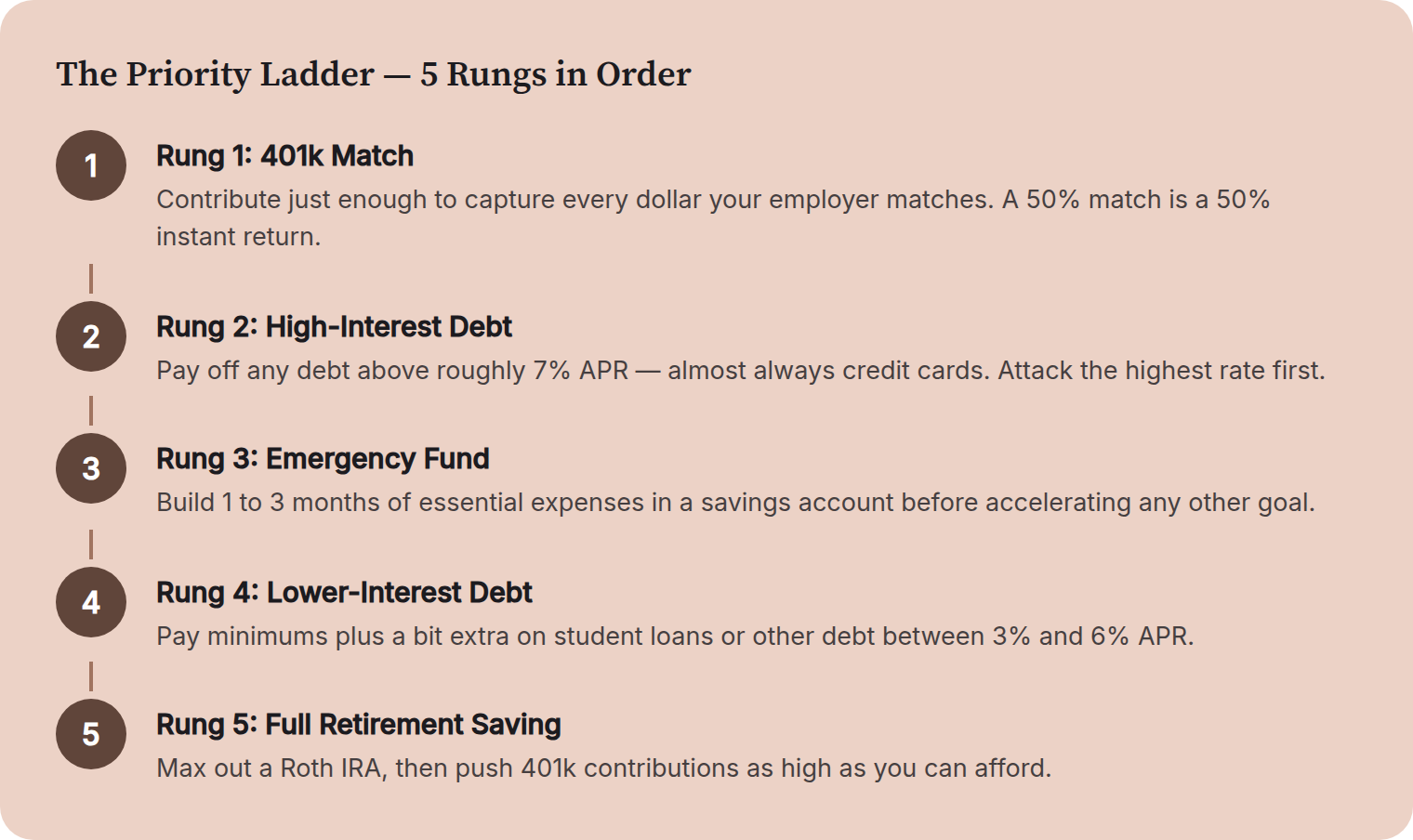
Start by contributing enough to your 401k to capture every dollar of employer match — that is an instant 50–100% return nothing else can beat. Next, attack your credit card debt aggressively, because 20%+ interest is a guaranteed loss that outpaces almost any investment. Once the cards are clear, redirect that payment toward your student loan while slowly increasing your 401k contribution, because student loan interest is usually low enough that you can tackle both simultaneously without sacrificing long-term wealth.
Get the guide — freeWhat's inside
Plus 2 fill-in worksheets and a 12-step action checklist.
A page from the guide
Who it's for
A person in their late 20s or early 30s who has just started a job with a 401k, is carrying credit card balances and a student loan, and feels paralyzed trying to figure out whether to save or pay down debt first. They are juggling three competing financial demands at once and have no clear framework for prioritizing them. They worry that putting money in the wrong place means losing free employer money, paying crushing interest, or falling behind on retirement forever. The anxiety is less about the math and more about making an irreversible mistake.